Osteoporosis is usually painless until a bone breaks.
Fragile bones
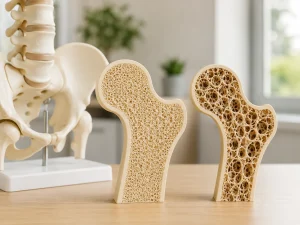
Healthy bone becomes more porous and easier to fracture.
Early action helps
Knowing your risk can help you ask for screening earlier.
SIMPLE DEFINITION
What Is Osteoporosis?
Healthy bone is like honeycomb. In osteoporosis, the holes get bigger, making bone fragile like a dry mopani stick. A simple sneeze or bump can cause a break.
Many people only learn about osteoporosis after a fracture. These simple facts can help people understand the condition earlier.
Myth: “My bones hurt, so I must have osteoporosis.”
Fact: Osteoporosis is usually painless until a bone breaks.
Myth: “Only rich people get sick.”
Fact: Poor nutrition and lack of screening can affect everyone.
Fact: Early menopause or removal of ovaries increases risk.
Women who experience early menopause or have their ovaries removed should speak to a healthcare provider about bone health risk.
CHECK YOUR RISK
Am I at Risk?
ZOBS is guided by patient advocates, healthcare professionals and specialists committed to improving bone health awareness, screening and care in Zimbabwe.
Over 50 years old
Bone strength can reduce with age, especially after 50.
Family history
A family history of hip fractures may increase your risk.
Low body weight
A thin build can be linked with higher fracture risk.
Long-term steroid use
Steroids used for asthma or arthritis can affect bone health.
Low calcium intake
Avoiding milk or leafy greens can reduce calcium intake.
Ask About a Bone Density Scan
If you are over 50, have had a fracture after a minor fall, or are post-menopausal, ask your doctor about a Bone Density (DEXA) Scan.